The IT department that staff once dreaded became the one they trusted most.
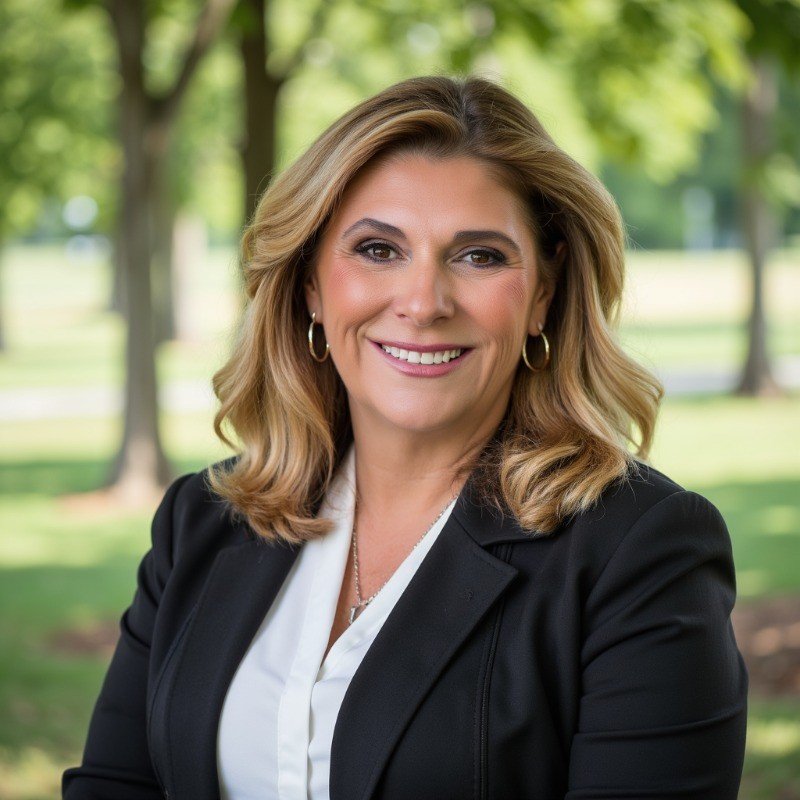
When Deb Cafarella became director of IT at a hospital, the department was already hated. Not underappreciated. Hated. So she booked the auditorium, put her team on stage, and gave the whole staff the floor to say whatever needed saying. She and her team came to listen. The staff came prepared for something else.
“They came with pitchforks and torches.”
Deb Cafarella, Shields Health
The room was packed. She stood at a flip chart and told people to shout out their problems, and she wrote down every single one in front of everybody. No defense, no explanations. Just a list, growing longer, in her handwriting.
By the end, the room had turned. Nothing was fixed yet. But a staff that had felt ignored for years just watched the person responsible for their problems write every one of them into a public to-do list, with her own hand, instead of hiding from them. “You may not always give them the answer,” she says, “but at least people like to be heard.” They told her: “That took guts. You got my support.”
That’s the whole method, really. Deb has spent her career walking into IT departments that people have given up on, and she fixes them the same way every time: by refusing to let IT hide.
“IT organizations kind of get bad raps because they’re the department of no,” she says. And the department of no doesn’t just lose goodwill. It loses control. “If you’re a department of no and you’re not collaborative, people go around you.” That’s how shadow IT gets born: someone with a credit card, an expense report, and a problem you wouldn’t solve.
When she took over IT at Everbridge, the help desk’s customer satisfaction score was 65 percent. Employees called it the helpless desk. Each technician had a little cube on their desk that glowed green when you were allowed to talk to them and red when you weren’t. She saw the cubes on a Monday. By Friday they were gone. “Without the user, we have no job,” she says. Then she sent her team out to walk the floors and talk to people before anything was broken, so that seeing IT coming stopped meaning something was wrong. Eighteen months later the score was 95.
“I knew I joined a great company when IT didn’t treat me like a ticket.”
A new hire, on Deb’s team at Everbridge
At Shields Health, the stakes behind that philosophy are higher. Shields runs MRI and PET/CT imaging through its own centers and roughly 45 partner hospitals, which puts Deb in an unusual position: she’s a security risk to every partner, and every partner is a security risk to her. In her first year and a half, four of those partners were hit by ransomware. Her answer isn’t to slow the business down. “Security is part of patient care now,” she says. When a new partner had an active security incident in the middle of onboarding, her team didn’t kill the relationship. They isolated it: extra segmentation, extra monitoring, a hard limit on the blast radius. “If they have a breach, it can’t be my problem.” Protect, but don’t prevent.
The other thing she brings everywhere is a way of eating impossible workloads. She calls it the Everest effect. “When you’re staring at Mount Everest, you go, there’s no way I’m going to climb that,” she says. But nobody climbs Everest in a day. They climb it base camp by base camp. At one job she inherited 425 open projects, the oldest three years stale. First question: “Let’s go and see if this is even relevant anymore.” Then twelve projects at a time, nothing else, until the mountain was gone. At Shields she walked into 45 security projects due by year-end, in mid-October. Base camp one was five projects. By the end of the year her team had finished 37.
Ask where all this comes from and she’ll tell you about her father. He was in the military, and Deb grew up hearing how his men talked about him. “If he said we’re marching off a cliff, they would have done it, no questions asked,” she says. Not because he outranked them. Because he was honest with them, even when the news was bad. She runs her teams the same way: skip-level meetings with everyone two rungs down, public thank-yous every Friday, and a promise she repeats to her people:
“I’ve got one eye on your resume and one eye on the quality of work that we’re doing.”
Deb Cafarella, Shields Health
That honesty extends to the conversations most managers dodge. One employee at Shields was a step away from being let go, and nobody had told him how serious it was. Deb sat him down and told him plainly, framing it as coaching rather than punishment: “This is how I need you as my team member to play.” He turned it around. He never would have if everyone had kept sparing his feelings. “I’m doing you a disservice by avoiding conflict with you,” she says.
She didn’t arrive at that on her own. A manager once told her how to handle the conversations she dreaded: come at it out of love. “I know that sounds not businessy,” she says. Maybe. But it’s the same thing the room with the pitchforks was responding to.
This has been a DoGood Member Spotlight.