“If there were actually coders in the gym, this space would’ve been disrupted years ago.”
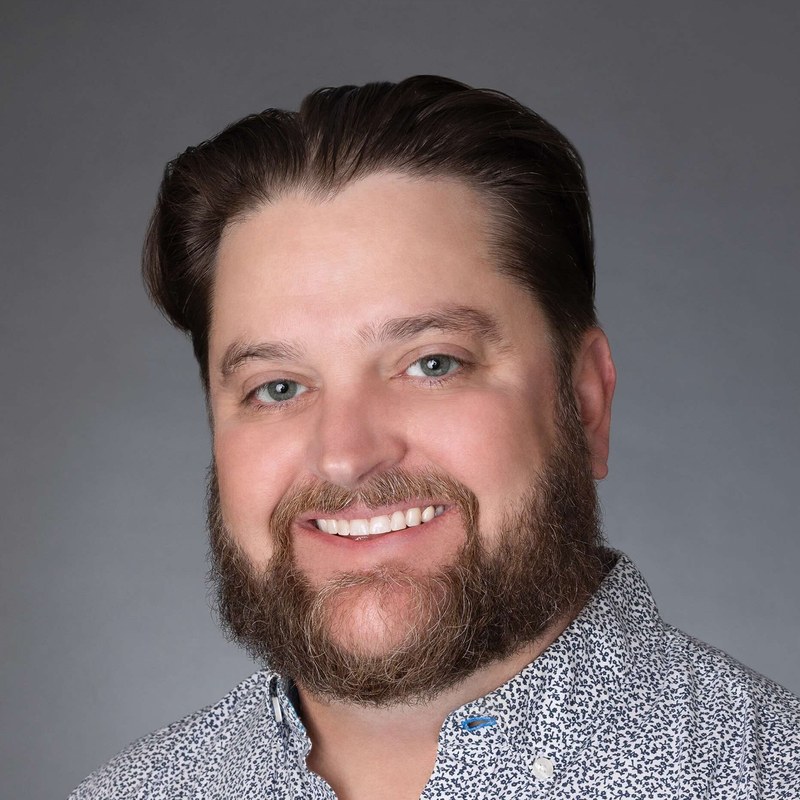
“If there were actually coders in the gym, this space would’ve been disrupted years ago.”
That is Aaron Gette’s verdict on an industry he has now spent ten years inside, fixing the thing he is complaining about.
He never planned to be there. He was a Silicon Valley technologist who had not worked a day in fitness and did not intend to. He started in the Valley in 1997, and assumed he would spend his career at technology companies, because that is where technologists went.
Then he built a consultancy for scaling startups, sold it in 2013, and landed somewhere he did not expect.
The Bay Club is a premium California operator, and the job there was the closest thing to normal hours he had ever had.
“We weren’t curing cancer. Even when we had outages, people could still go to the gym.”
What he found underneath was worse than the joke suggests. Forty years of aging infrastructure, inside an industry with no clear parent.
“Fitness is tough. It’s a young industry. We’re somewhere in between retail and hospitality and healthcare.”
Aaron Gette, EōS Fitness
It borrows from all three and gets the full attention of none of them. Nobody was going to fix that from the outside, so he started arguing for it from within.
The Bay Club changed private equity owners three times while he was there. Each time, he made the same case to a new set of people who had bought a fitness business and not a software one.
“It took a lot of convincing to get the different private equity groups I worked with to invest in technology.”
He won the argument, and the results backed him. Revenue went up. People stayed longer.
“You give people the things that they want, in a connected, individualized experience.”
Then he left, and assumed that was the end of it.
“I felt like Bay Club was a bit of a unicorn in that way. I honestly didn’t think there was gonna be another opportunity like that.”
He bought into a software development agency and ran it through the pandemic. He was still an owner when a former colleague called about a value-priced gym chain that had a technology department and nobody leading it. He did an assessment and presented his findings to the board. They asked him to do the job himself.
The company had under 40 gyms then. It has 182 now.
This time, the argument was already won.
“Our CEO believes in the tech side of it.”
So he built the thing he had been describing for a decade. It starts with the problem, which is a person standing in a doorway.
“There’s a lot of energy. You come in and you’re like, ‘Oh wow, this is amazing.’ But where do I start? What should I do?”
EōS is the largest customer of EGYM, a German maker of connected strength equipment, and the two of them spent two years building the answer. Every new member gets a free welcome workout: a biometric scan, a range of motion test, and four machines to find out where their strength actually is. Then the system writes them a plan, and rewrites it every time they check in.
“Whether you’re ‘Hey, I don’t know what to do, it’s my first time in a gym,’ or ‘I’m a gym rat,’ there’s always an opportunity to learn something new, to do something different, to break your routine or to help you build a routine and keep it.”
It is not finished. At the start of October he was in Munich, working out how to extend the same guidance to every other machine on the floor, so that a member whose equipment is taken still knows exactly what to do instead.
Ten years of arguing for technology has not made him sentimental about it. He runs AI as continuous innovation, which means failing quickly: start plenty of projects, and keep the few that actually move the business.
To stay, a project has to clear one bar, and it is the same bar he would put in front of a forklift. Drive top-line revenue or cut bottom-line cost. Efficiency on its own does not count, because he has watched too many teams book the saving and then spend it twice over cleaning up the output.
Ask what he would tell someone ten years behind him, and he goes straight at the part of the climb that stops most people.
“Lots of folks can get to director of IT and maybe VP of IT, but it’s that chasm of crossing over to CIO or CTO or even CISO.”
Aaron Gette, EōS Fitness
The way across is not technical, which is the point of everything above it. A CIO has to understand the whole business, and the only way to do that is to go and sit with the people who do not do your job.
“Learn from the CMO or VP of marketing. Learn from the VP of sales. Learn from every aspect, operations particularly… I’ve learned so much from COOs and just really great operators. Those have been some of my greatest teachers.”
Aaron Gette, EōS Fitness
Then he says the part that never shows up on a resume.
“I wouldn’t be anywhere if people weren’t willing to bring me under their wing.”
This has been a DoGood Member Spotlight.