Ask what he’s proudest of and he doesn’t name a system.
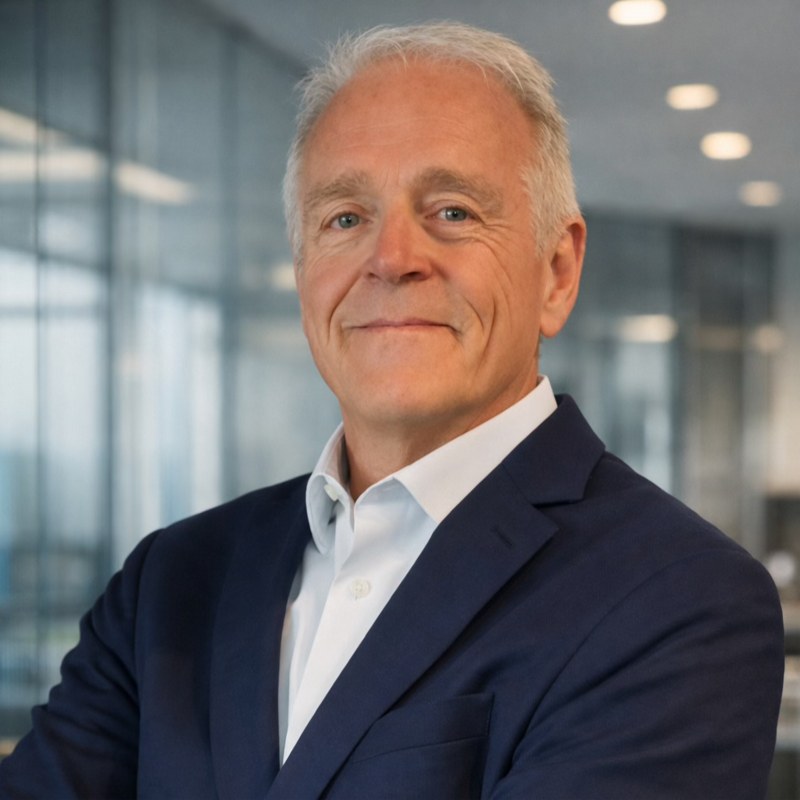
Six years ago, Scot Burdette joined a division that had talented technical contributors but no centralized technology organization to align strategy, execution, and long-term planning.
That division is Measurement & Analytics at ABB, and it is not small. More than four thousand employees across sixty-odd countries. Three separate business lines, each manufacturing and selling its own products. Ten manufacturing plants scattered across the globe, and through two successful acquisitions, additional factories will be added to the portfolio.
“With ten factories today and additional sites being added over time, the workload continues to grow, and so do business needs.”
Scot Burdette, ABB
A lot of what ABB Measurement & Analytics makes is engineered-to-order, and the products are complex industrial equipment, so the requirements have to be correct before anything gets built.
“It’s got to be right,” Scot says. “And it has to have an on-time delivery, with the quality and accuracy our customers expect.”
The team has focused on automating and connecting the sales-to-order process, linking local sales teams directly to the specific factory responsible for the product so orders move faster, with greater accuracy and the quality required for ABB’s engineered-to-order equipment.
The integrated order-management process now supports nearly sixty local country teams. Different languages. Different currencies. Different regulations, all of which must land correctly inside the sales order itself.
The complexity of the process demands close collaboration between global and local teams, each playing a critical role in getting orders right.
“It’s highly complex,” he says.
The roadmap runs three to five years out, and Scot doesn’t set it alone. The division’s leadership team, including leaders from business, operations, finance, and technology, review and agree on the roadmap and their individual roles in making it a reality. Scot and his leaders created, and now maintain, this rolling technology roadmap to guide the division’s long-term technology direction.
With leadership agreement, Scot produces the detailed plans, roles and responsibilities, and expected technology outcomes. Then he and his team work with the business leaders to ensure the right outcome.
The flagship of that roadmap is a system his team calls the end-to-end connected sales landscape, finished about a year ago and now implemented worldwide. It takes an order from a customer, runs it through the Configure, Price, Quote process to create a quotation for the customer, and on acceptance sends it directly to the correct factory. The factory confirms. Manufacturing starts.
“All streamlined into an integrated workflow,” he says. “Which has been really transformational for us.”
It has to be implemented country by country, and nearly fifty are up and running on it so far.
The other big piece of the job is integrating acquired companies. ABB acquires them, and Scot’s team contributes to make them part of ABB, which over the years has meant folding in new factories across North America and Europe. He is blunt about where technology sits in that process: when the due diligence starts, IT serves as the backbone. Every function has a need and a stake in it, from HR to product management, real estate to legal to manufacturing to sales, and all technology requirements need to be defined before work can begin in the focused area.
He’ll tell you the hardest part isn’t technical.
“One of the hardest things is making sure that everybody has realistic expectations,” he says. “They want to go right now.” Meanwhile his team is inheriting technology platforms that require reviews and audits. “You don’t know really the status of all the systems, laptops, the buildings, factories, everything that you’re now acquiring.”
And the clock is real, because the point of an acquisition isn’t the acquisition.
“Our number one goal when we acquire a company is to combine our product families so the sales team can sell a broader product portfolio to meet the expanding needs of our customer base,” he says. “Get those combined quickly so we can get out in front of the market.”
The team he built to carry all of this runs through three leaders. One owns data: cleansing, usage, and the analytics work that AI has made enormous. One runs infrastructure. One runs every application platform, which at this point means SAP, Camos, Salesforce, Snowflake, Ariba, Celonis, and the rest of the estate a division this size accumulates. Scot describes all three as huge jobs, which is what happens when the surface area is sixty countries.
ABB knew him before they hired him. Years earlier he’d been on the vendor side, working with ABB as a customer, and when they hit a problem on a project the project sponsor called him and Scot fixed it. When the leadership job opened, the sponsor remembered.
Before that he spent years inside General Motors, where he became responsible for the manufacturing system running the Buick, Oldsmobile, and Cadillac lines across North America. When the system that ran the factory floor went down, the 3 a.m. call was his.
Ask him what he’s proudest of and he doesn’t name a system.
“I’m proud of what the team has done, and how we pull together to solve complex problems that some people even question if we could ever solve. I love that. I love the challenge.”
Scot Burdette, ABB
There was an admin on his team who’d been in the role a couple of years and told him she wasn’t sure she was challenged by the role anymore. He asked her what she wanted to do instead. She said project manager. So they trained her into it. She runs million-dollar technology programs now.
The college interns he hired are in leadership roles on his team a decade later.
“Nothing makes me happier than to promote somebody,” he says.
He looks for one thing before he invests.
“It takes some enthusiasm on their part, and some desire to become better, or to become more,” he says. “And if they do, I’ll water that all day long.” Even when watering it means losing them. If someone grows past his team and leaves for somewhere else in the company, that’s fine by him. The alternative is stifling them.
He puts it plainly: if people are applauding the team, he stands behind them. If people are criticizing the team, he stands in front of them.
He knows the job is temporary. He’s said so.
“I’m in this job for a while, but I won’t be here forever. And I’ve got to be able to pass it forward to the next person, and I want to leave it better than it was before. That’s what stewardship is. Not owning it. Curating it, and making sure that you can make it better than it was.”
Scot Burdette, ABB
This has been a DoGood Member Spotlight.